

If you’ve ever felt the urge to jump into a trade simply because the market is moving, you’re not alone—and you’re likely part of the 90% of day traders who lose money. The counterintuitive truth is that trading less frequently produces better results. Impatience, particularly in 24/7 crypto markets, drives overtrading and FOMO-fueled decisions that systematically drain accounts. This article presents data-backed evidence showing why patience isn’t passive waiting—it’s an active competitive advantage. You’ll discover the neuroscience behind impulsive trading, how institutions profit from retail impatience, and practical strategies to develop patience as a measurable skill that separates profitable traders from the struggling majority.
The Overtrading Trap: Why More Isn’t Better
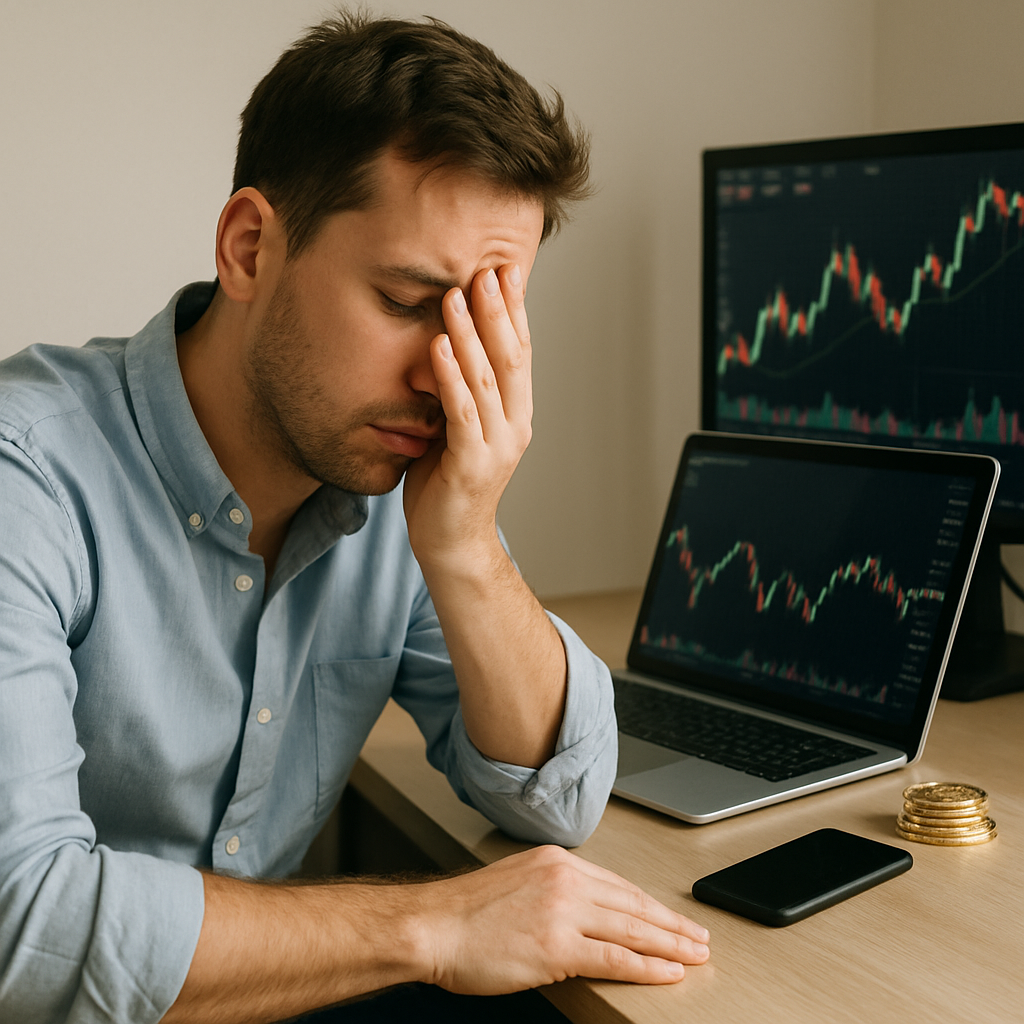
Retail traders lose money at an alarming rate, with 90% of day traders ultimately bleeding their accounts. While many factors contribute to this statistic, overtrading stands out as one of the most destructive yet preventable behaviors. The irony is that more activity in trading doesn’t translate to better results—it typically guarantees the opposite.
Research shows that traders who cut their trading frequency by 50% while maintaining strict entry criteria see an average 25% improvement in profitability. This isn’t a minor edge; it’s a fundamental shift in outcomes. The difference between struggling and profitable traders often comes down to selectivity, not skill in execution.
The Cost of Constant Action
Every trade carries friction costs that compound rapidly with frequency. In forex, spreads on major pairs might seem negligible at 0.5-2 pips, but a trader executing 20 positions per week pays these costs 1,040 times annually. For cryptocurrency traders, exchange fees of 0.1-0.5% per trade create similar drag. A trader making 10 crypto trades weekly at 0.2% fees pays 104% of their capital in transaction costs over a year—before considering slippage or spread.
Beyond direct costs, overtrading introduces psychological fatigue. Each decision depletes mental resources, leading to deteriorating judgment as the trading day progresses. The trader who executes 15 setups daily operates with compromised decision-making on trades 10 through 15, often entering positions they would have rejected with a fresh mind.
Market Availability vs. Market Opportunity
The forex market’s 24/5 structure and cryptocurrency’s perpetual operation create a dangerous illusion: the belief that constant opportunity exists simply because markets remain open. In reality, high-probability setups tied to specific market sessions, liquidity conditions, and technical confluences occur far less frequently than the market’s availability suggests.
London session volatility, New York-London overlap liquidity, and major economic releases create genuine opportunities. The remaining hours often produce choppy, directionless price action that punishes impatient traders seeking action rather than edge. Professional traders recognize this distinction and wait accordingly.
The Neuroscience Behind Impatient Trading Decisions
When a trader sees Bitcoin surge 5% in fifteen minutes, their brain doesn’t activate the same regions responsible for careful analysis and planning. Instead, the amygdala—the brain’s primitive fear and emotion center—takes control, triggering a cascade of impulsive responses designed for survival, not financial decision-making. This neurological hijacking explains why even experienced traders abandon their strategies during volatile market conditions.
Fear vs. Rational Thinking
Trading under emotional pressure creates a literal battle inside your brain. The prefrontal cortex, responsible for rational thought, risk assessment, and long-term planning, requires time and calm conditions to function properly. When impatience or fear takes over, blood flow shifts toward the amygdala, which evolved to make split-second decisions about physical threats—not complex financial instruments.
This shift manifests in concrete trading behaviors: entering positions without confirming your setup criteria, ignoring stop-loss levels you set during calm periods, or revenge trading after a loss. Each represents the amygdala overriding rational processes. Traders experiencing this shift often report feeling compelled to act, describing sensations of urgency that bypass logical analysis entirely.
The FOMO Effect in 24/7 Markets
Cryptocurrency markets compound this neurological challenge by operating continuously. Unlike traditional forex markets with defined session breaks, crypto never sleeps, creating an environment where FOMO (fear of missing out) can strike at 3 AM on a Sunday. This constant availability exploits a cognitive vulnerability: humans struggle to distinguish between genuine opportunities and manufactured urgency.
The result? Traders enter positions based on price movement alone, skipping the technical or fundamental analysis they’d normally require. Research shows this pattern particularly affects retail traders monitoring social media, where viral posts about rapid gains trigger the same neurological response as seeing a predator in ancestral environments—immediate action without deliberation.
Warren Buffett’s Pitch: Waiting for High-Probability Setups
Warren Buffett famously compared investing to baseball with one crucial difference: “You don’t have to swing at every pitch.” In traditional baseball, three strikes and you’re out. In trading, you can watch a hundred pitches go by without penalty, waiting patiently for the one setup that sits perfectly in your strike zone.
This philosophy directly contradicts how most retail traders operate. The forex market runs 24 hours a day, five days a week. Cryptocurrency markets never sleep. This constant accessibility creates a dangerous illusion that opportunity exists every minute, prompting traders to swing at marginal setups simply because they’re available.
Professional traders understand a counterintuitive truth: their win rates typically hover between 40-60%, yet they remain consistently profitable. The secret isn’t winning more often—it’s being ruthlessly selective about which trades they take. A professional might scan the markets for hours, identify three potential setups, and execute only one after the other two fail to meet specific criteria. That single trade, entered with conviction during optimal conditions, can outperform a dozen mediocre entries.
High-probability setups don’t announce themselves with fanfare. They emerge during specific market conditions:
- Major currency pairs during London-New York session overlap when liquidity peaks
- Clear trend continuation after healthy pullbacks to key support or resistance
- Confluence zones where multiple technical factors align (trend, momentum, volume, key levels)
- Post-news consolidation periods when volatility stabilizes
The quality of your trades matters exponentially more than their frequency. A trader making 50 mediocre trades per month, winning 55% of them, will likely underperform someone making 8 carefully selected trades with a 45% win rate—if the selective trader properly manages risk-reward ratios and lets winners develop fully. Patience isn’t passive waiting. It’s active discipline, continuously evaluating market conditions while refusing to force opportunity where none exists.
How Patient Traders Manage Positions Differently
Retail traders exhibit a counterintuitive behavior that sabotages their accounts: they hold losing positions for an average of 23 hours while closing winning trades after just 11 hours. This inverted approach to position management directly contradicts the foundational principle of cutting losses short and letting winners run.
The Winner-Loser Holding Paradox
The data reveals a stark contrast between patient and impatient position management. When analyzing thousands of retail forex and crypto accounts, researchers found that traders who reversed this pattern—holding winners longer than losers—achieved 30-40% better returns compared to those who didn’t. The mathematics becomes clear: a trader with a 50% win rate who lets winners run twice as far as losses will be profitable, while one who does the opposite will steadily drain their account.
Patient traders approach position management with predetermined criteria rather than emotional reactions. They set wider stop-losses based on technical structure, not arbitrary pip counts, and use trailing stops to capture extended moves. Impatient traders, conversely, watch every tick, triggering their exit at the first sign of profit out of fear the market will reverse.
Key differences in position management include:
- Entry timing: Patient traders wait for confirmation and optimal entry points, even if it means missing the initial move
- Stop-loss placement: Positioned beyond market noise at logical technical levels rather than tight, arbitrary distances
- Profit targets: Based on measured moves, support/resistance zones, or trend continuation rather than round numbers
- Position monitoring: Periodic review at session closes rather than constant chart-watching
Patience in Short-Term Trading
Even day traders benefit from strategic patience. Professional intraday traders typically avoid the first hour of major session opens, waiting for initial volatility and false breakouts to settle. This patience paradox—waiting to act quickly—allows them to trade cleaner setups with tighter spreads and more predictable price action. Backtested strategies consistently show that avoiding the first 30-60 minutes of high-impact sessions improves win rates by 15-20% while reducing average loss per trade.
How Institutional Players Profit from Retail Impatience
Market makers and institutional traders operate with a fundamental advantage: they know retail traders lack patience. This information asymmetry generates billions in annual profits as institutions position themselves on the opposite side of emotional, impulsive trades.
When a retail trader sees a sudden price spike and jumps in, fearing they’ll miss the move, they’re often buying exactly what institutional players are selling. The same dynamic occurs in reverse during sharp declines. Market makers engineer these short-term price movements specifically to trigger stop-losses and emotional entries. A classic example occurs during the London-New York session overlap in forex markets, where brief liquidity surges create false breakouts that reverse within 30-60 minutes after retail traders have committed capital.
The mechanics are straightforward. Institutional algorithms detect clusters of stop-loss orders just beyond obvious support and resistance levels. By pushing price temporarily through these levels, they trigger cascading stop-loss orders that provide the liquidity institutions need for their larger positions. Impatient retail traders see the breakout, enter the trade, and become exit liquidity as the price reverses.
This pattern repeats constantly in cryptocurrency markets, where 24/7 trading and high volatility amplify the effect. Bitcoin’s 2023 price action demonstrated this repeatedly, with 5-8% moves in either direction that reversed within hours, trapping traders who chased the momentum.
Patient traders avoid this trap by waiting for confirmation rather than reacting to initial moves. They recognize that the first spike or drop is often designed to extract maximum retail participation at the worst possible prices. By sitting through the noise and entering only when their predetermined criteria align, patient traders avoid becoming the counterparty that institutions need. The difference between reacting and responding often determines whether you’re providing liquidity or taking it.
Practical Strategies to Cultivate Trading Patience
Developing patience isn’t about willpower alone—it requires systems that remove emotional decision-making from the equation. Traders who implement structured processes make fewer impulsive trades and see measurable improvements in their win rates and overall profitability.
Building a Pre-Trade Checklist
A pre-trade checklist acts as a gatekeeper between impulse and execution. Before entering any position, verify each criterion:
- Technical confluence exists – At least two technical factors align (support/resistance level, moving average, Fibonacci retracement)
- Risk-reward ratio meets minimum threshold – Typically 1:2 or better
- Market session aligns with strategy – EUR/USD setups work best during London/New York overlap, not Asian session
- Economic calendar is clear – No high-impact news within the next 4 hours
- Position size calculated – Risk no more than 1-2% of account capital
- Entry, stop-loss, and take-profit levels defined – Never enter without knowing your exit
If any box remains unchecked, the trade doesn’t happen. This simple rule eliminates approximately 60-70% of marginal setups that most impatient traders take.
Technology Tools for Patient Trading
Modern platforms offer features designed to reduce screen time and eliminate the urge to constantly monitor positions:
- Price alerts – Set notifications at key levels rather than watching every candlestick form
- Pending orders – Place limit orders at predetermined levels and walk away
- Trade journals with screenshot capability – Document each setup’s emotional state and reasoning; patterns of impatience become visible within 20-30 logged trades
- Session timers – Limit chart exposure to specific review windows (twice daily maximum for swing traders)
Position sizing plays an underrated role in patience. When risking only 1% per trade, a single loss feels manageable. When risking 10%, every price tick triggers anxiety and premature exits. Smaller positions create psychological space for strategies to develop properly.
Waiting periods add another layer of discipline. After identifying a setup, set a 15-minute timer before execution. This cooling-off period filters out excitement-driven trades while allowing rational confirmation.
Measuring Success: Quality Over Quantity Metrics
Most traders sabotage their progress by tracking the wrong numbers. A 60% win rate sounds impressive until you realize those wins averaged 15 pips while losses averaged 45 pips. Shifting to quality-focused metrics transforms how you evaluate performance and reinforces patient trading behavior.
Start by assigning a quality score to each trade before execution. Grade setups from A to C based on how many criteria align: confluence of technical factors, ideal market conditions, proper risk-reward ratio, and alignment with your trading plan. Track what percentage of your actual trades qualify as A-grade setups versus total opportunities you considered. Professional traders often take fewer than 30% of the setups they analyze, waiting specifically for A-grade configurations.
The metrics that actually predict long-term profitability look different from what most beginners monitor:
- Average hold time per winning trade — Patient traders typically hold winners 2-3x longer than losing positions
- Profit per trade — More valuable than win rate; a 45% win rate with 3:1 reward-risk outperforms 65% wins at 1:1
- Trades per week vs. account growth correlation — Plot this monthly; inverse correlations signal overtrading
- Actual risk-reward ratios achieved — Not planned ratios, but what you actually closed; target minimum 2:1 on winning trades
- Time between trades — Tracks impulsive behavior; professionals average 2-5 forex trades per week, not per day
Create a simple spreadsheet that calculates your quality score: multiply your percentage of A-grade setups taken by your average risk-reward ratio achieved. A trader taking 25% A-grade setups with 2.5:1 average RR (quality score: 0.625) will consistently outperform someone taking 80% of setups with 1.2:1 RR (quality score: 0.96 appears higher but includes many marginal trades that erode profitability through commissions and slippage).
Review these metrics weekly, not daily. Patient trading requires patient evaluation.
From Knowledge to Practice: Making Patience Your Edge
The evidence is clear: patience isn’t a passive trait for traders who lack ambition—it’s an active, trainable skill that creates measurable competitive advantage. The neuroscience shows why impulsive decisions fail, the data proves that selective trading outperforms frequent activity, and institutional behavior confirms that retail impatience is systematically exploited for profit.
What separates this knowledge from results is implementation. Start with one concrete change this week: build your pre-trade checklist and refuse to execute without completing it. Track your quality metrics for 30 trades, measuring not how often you win, but how selective you are and what risk-reward ratios you actually achieve. Set price alerts instead of watching charts, and implement a 15-minute waiting period between setup identification and execution.
In markets engineered to trigger urgency and FOMO, disciplined waiting becomes your edge. The majority will continue chasing every move, overtrading their accounts into losses, and providing the liquidity that patient traders capture. Your profitability doesn’t require predicting every market turn—it requires the discipline to wait for the setups where probability, risk-reward, and market conditions align in your favor.
Patience is measurable, trainable, and directly correlated with performance. The data backs it. The question is whether you’ll implement it.