

Ninety-five percent of traders lose money over the long term. That’s not a scare tactic—it’s a statistical reality documented across forex, equities, and cryptocurrency markets. But here’s what most traders miss: the difference between the 5% who succeed and the 95% who fail isn’t strategy, technical analysis skill, or market knowledge. It’s psychology. This article examines the evidence-based psychological traits, habits, and mental frameworks that separate consistent winners from the majority. You’ll discover the specific emotional regulation techniques, risk management mindsets, cognitive bias awareness, and preparation routines that define professional traders—and learn how to develop these trainable skills yourself.
The Risk Management Mindset: Why 1-2% Matters More Than You Think
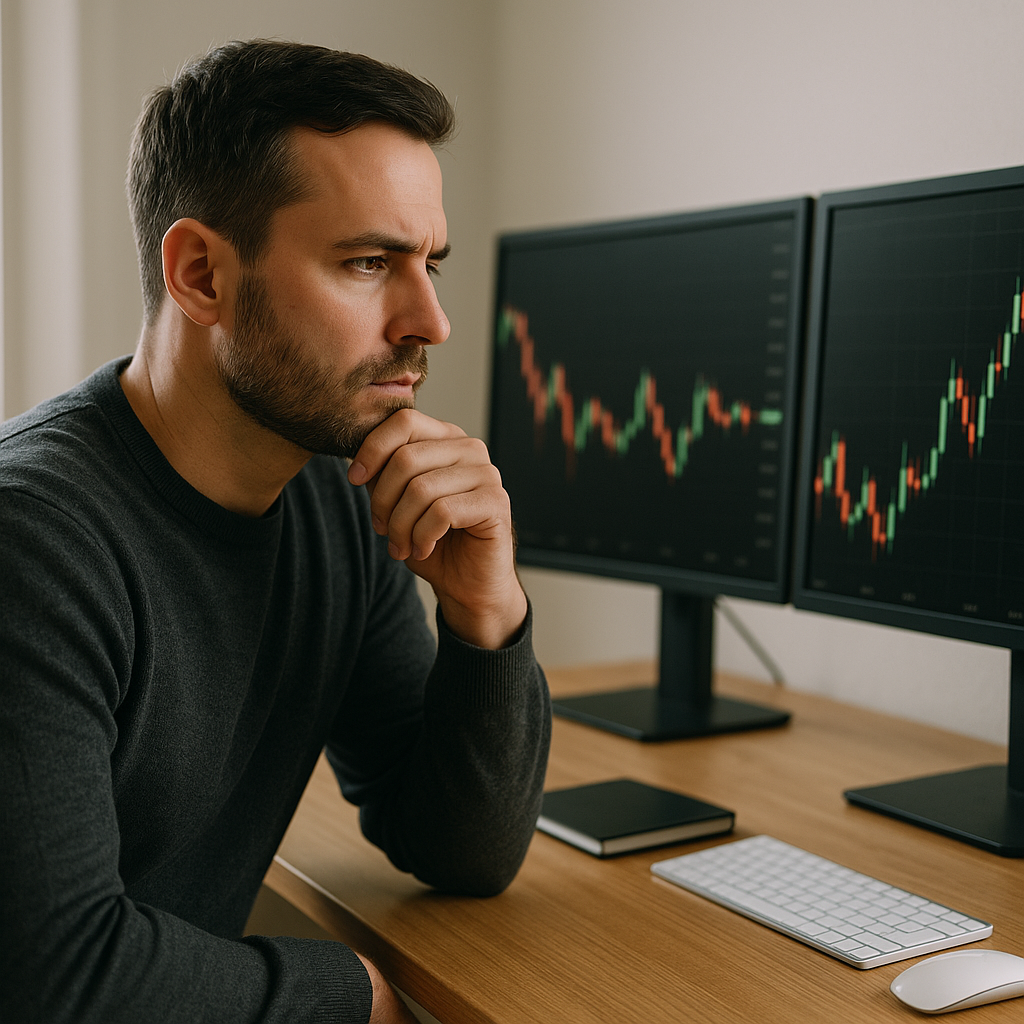
Professional traders protect their capital like a fortress, risking no more than 1-2% on any single trade. This isn’t just a technical guideline—it’s a psychological defense system that separates the 5% who survive from the 95% who blow their accounts.
The math seems simple: risk $100 on a $10,000 account instead of $1,000. But the real protection isn’t financial. It’s emotional. When you limit your exposure to 1-2% per trade, you’re building a buffer between your rational mind and the brain’s primitive fear response. A $100 loss stings. A $1,000 loss triggers panic, revenge trading, and the cascade of emotional decisions that destroy trading careers.
The Neuroscience of Loss Aversion
Your brain treats financial losses like physical threats. The amygdala—your brain’s ancient alarm system—activates during trading losses the same way it would if you encountered a predator. Research shows this fear center becomes hyperactive when accounts move into the red, flooding your system with cortisol and adrenaline. Your prefrontal cortex, responsible for rational decision-making, gets overridden by fight-or-flight impulses.
This is why traders who lose 20% of their account in one trade rarely recover. The neurological damage isn’t just financial—it’s a rewiring of your risk perception. You either become paralyzed by fear or chase losses with increasingly reckless position sizes. Both paths lead to the same outcome.
How Small Position Sizing Preserves Emotional Capital
Conservative position sizing does something counterintuitive: it makes you more aggressive in the right way. When each trade risks only 1-2%, you can withstand a string of five or even ten losses without existential dread. Your strategy gets a fair chance to play out across dozens of trades. You make decisions based on probability and edge, not desperation.
Traders who risk 10% per trade might only get three or four chances before psychological collapse sets in. The account might technically survive, but the trader’s ability to execute their plan doesn’t. That’s the hidden cost of oversized positions—they don’t just threaten your capital, they corrode your emotional stability and decision-making capacity with every loss.
Emotional Regulation: The Skill That Beats IQ and Market Knowledge
Research confirms what veteran traders have long known: emotional control predicts trading success more accurately than intelligence or technical expertise. A trader with average market knowledge but exceptional emotional regulation will consistently outperform a brilliant analyst who can’t manage their emotional responses during losses.
The brain’s amygdala becomes hyperactive during trading losses, triggering fight-or-flight responses that override rational decision-making. This biological reaction explains why even experienced traders make impulsive decisions after a string of losses—selling winners too early, doubling down on losing positions, or abandoning their tested strategies entirely. The difference between the 5% who succeed and the 95% who fail isn’t intelligence; it’s the ability to recognize and manage these emotional triggers.
Practical Techniques for Emotional Control
Developing emotional regulation doesn’t require years of therapy or innate talent. These evidence-based techniques have measurable effects:
- Meditation and mindfulness practices reduce cortisol (stress hormone) levels by approximately 30%, allowing traders to maintain clearer judgment during volatile markets
- Pre-trade checklists create psychological distance between impulse and execution, forcing a moment of rational assessment before entering positions
- Loss journaling helps identify emotional patterns by documenting not just what happened, but how you felt before, during, and after each trade
- Breathing exercises (4-7-8 technique: inhale 4 counts, hold 7, exhale 8) activate the parasympathetic nervous system, counteracting the stress response within minutes
Maintaining composure after losses is a trainable skill. Professional traders often implement “circuit breakers”—predetermined rules to stop trading after two consecutive losses or a specific drawdown percentage. This prevents emotional decision-making during the exact moments when it’s most dangerous.
The Role of Physical Health in Trading Performance
Sleep deprivation reduces cognitive performance by 20-30%, directly impacting pattern recognition, risk assessment, and impulse control. Traders operating on six hours of sleep or less show decision-making patterns similar to those with a 0.05% blood alcohol level. Regular exercise, proper nutrition, and consistent sleep schedules aren’t optional for serious traders—they’re foundational elements of sustainable performance.
The 80/20 Rule: Preparation Over Execution
Professional traders allocate their time in a counterintuitive pattern that separates them from the retail majority: roughly 80% goes to analysis, planning, and preparation, while only 20% involves actual trade execution. Retail traders typically invert this ratio, spending most of their screen time clicking buttons and chasing price movements, then wondering why consistent profitability remains elusive.
This time allocation discrepancy explains much of the performance gap between the 5% who succeed and the 95% who don’t. When professionals aren’t actively in positions, they’re conducting market reviews, updating watchlists, stress-testing strategies against historical scenarios, and refining their edge. The actual moment of entering or exiting a trade becomes almost mechanical—a natural conclusion to hours of groundwork rather than an emotional reaction to price action.
What Professional Preparation Looks Like
Successful traders treat preparation as their primary competitive advantage. They maintain detailed trading journals that track not just entries and exits, but emotional states, market conditions, and decision quality. Research shows traders who consistently journal improve performance by 15-20% over six months, primarily because they identify and eliminate recurring behavioral mistakes that erode profits.
Beyond journaling, preparation includes building comprehensive market scenarios before sessions begin. Professionals identify key technical levels, mark high-impact news events, and define specific conditions that must exist before they’ll risk capital. This systematic approach creates what sports psychologists call “peak performance states”—mental clarity that enables rational decisions under pressure.
Building Your Pre-Trade Routine
A robust pre-trade routine transforms preparation from abstract concept into daily practice. Start each trading session with a 15-30 minute review covering:
- Market sentiment analysis across major pairs or crypto assets
- Technical level identification on multiple timeframes
- Economic calendar review for volatility catalysts
- Maximum risk allocation for the session (typically 1-2% per trade)
- Specific entry criteria that must be satisfied before execution
This systematic process eliminates the impulsive decision-making that plagues retail traders. When preparation becomes routine, execution becomes easier—not because the market is predictable, but because you’ve already made the hard decisions before emotions get involved.
Cognitive Biases That Destroy Accounts
Research shows that traders hold losing positions 124% longer than winning ones, a phenomenon that has bankrupted more accounts than any single market crash. This self-sabotage isn’t a strategy flaw—it’s hardwired into human psychology through cognitive biases that override logic when real money is at stake.
The Disposition Effect and Why We Hold Losers
The disposition effect drives traders to sell winners prematurely while clinging to losers in hopes they’ll recover. When a position moves into profit, the brain releases dopamine and creates an urgent desire to lock in the win. Conversely, realizing a loss triggers psychological pain that traders avoid by maintaining false hope. A forex trader who closes a 20-pip winner but holds a 150-pip loser “just until it gets back to breakeven” is experiencing this bias in real time. The result? Small wins, massive losses, and inevitable account depletion.
Confirmation Bias in Trade Selection
Approximately 85% of retail traders actively seek information that confirms their existing positions while dismissing contradictory signals. A trader convinced that Bitcoin will reach $100,000 will focus exclusively on bullish narratives, technical patterns, and influencer predictions that support this view. Bearish divergences, declining volume, or negative regulatory news get filtered out completely. This selective attention creates echo chambers where traders:
- Interpret neutral price action as validation of their thesis
- Dismiss stop-loss triggers as “market manipulation” or temporary noise
- Add to losing positions because they “know” the market will reverse
- Ignore risk-reward ratios when the trade “feels right”
FOMO and Overtrading in 24/7 Crypto Markets
Fear of missing out drives approximately 40% of retail trading losses through impulsive overtrading. The cryptocurrency market’s round-the-clock operation intensifies this pressure—traders wake up to price movements they missed, triggering reactive entries at the worst possible moments. Studies indicate crypto traders experience three times more emotional volatility than forex traders, largely due to extreme price swings and constant market access. A trader who enters a position because “everyone else is making money” has already abandoned their edge. Revenge trading follows naturally—after a FOMO-driven loss, traders immediately open new positions to “win back” what they lost, compounding the damage through emotional decision-making rather than strategic analysis.
Why 70-80% Quit Within Two Years: The Psychological Attrition Rate
The numbers tell a brutal story: between 70-80% of traders abandon the markets within their first two years, and the culprit isn’t what most expect. It’s not insufficient technical knowledge or poor chart-reading skills. The real killer is psychological collapse under the weight of repeated emotional decision-making.
Research reveals that the average retail forex trader loses approximately $1,200 in their first year. What makes this statistic particularly damaging is that 89% of these losses stem from emotional decisions rather than flawed strategies. Traders aren’t failing because their systems don’t work—they’re failing because they can’t execute them consistently when real money is at stake.
Two psychological forces drive this attrition rate with particular intensity. Loss aversion, the tendency to feel losses roughly twice as intensely as equivalent gains, causes traders to hold losing positions far too long while cutting winners prematurely. This asymmetric emotional response systematically destroys accounts over time. Meanwhile, overconfidence following early wins creates a dangerous feedback loop where traders increase position sizes without corresponding increases in skill or market understanding.
The brain’s physiological response compounds these problems. During drawdowns, the amygdala triggers fight-or-flight responses that override rational decision-making. Traders experiencing this neurological hijacking often make their worst decisions precisely when discipline matters most—after a series of losses when they’re desperate to recover capital.
The survivors who make it past the two-year mark share a common trait: they recognize that trading success is fundamentally a psychological endurance test. They accept that strategies mean nothing without the emotional regulation to execute them through both winning and losing streaks. The 20-30% who persist understand that managing their internal state matters more than predicting the next market move.
Building a Consistent Trading Routine: The 67% Advantage
Professional traders operate with a deliberate structure that removes emotional turbulence from their decision-making process. Research indicates that traders who maintain consistent routines demonstrate a 67% higher probability of profitability compared to those who trade impulsively. This advantage stems from a simple psychological principle: routines eliminate the need for willpower at critical moments when your amygdala is firing and your judgment is compromised.
The distinction between successful and failing traders often comes down to preparation. While professional traders allocate 80% of their time to analysis and preparation versus just 20% on execution, retail traders typically invert this ratio. A structured routine transforms trading from a reactive gamble into a systematic process.
Morning Preparation Checklist
Before placing a single trade, establish your mental and analytical framework:
- Review economic calendar – Identify high-impact news events for the next 24 hours that could trigger volatility
- Check open positions – Assess overnight movements and adjust stop-losses if necessary
- Define daily risk parameters – Calculate maximum capital exposure (typically 1-2% per trade, 6-8% total portfolio risk)
- Identify key technical levels – Mark support, resistance, and breakout zones on your primary trading pairs
- Set session intentions – Determine maximum number of trades and specific setups you’ll pursue
This 15-20 minute ritual creates psychological boundaries that prevent impulsive decisions when market action accelerates.
Post-Trade Review Protocol
End each trading day with a structured debrief that builds pattern recognition and emotional awareness:
- Document trade details – Entry/exit prices, position size, and timeframe for every trade
- Record emotional state – Note confidence levels and emotional reactions during execution
- Analyze decision quality – Evaluate whether you followed your plan, regardless of profit or loss
- Identify pattern deviations – Compare actual market behavior to your pre-trade analysis
- Update performance metrics – Track win rate, average risk-reward ratio, and maximum drawdown
Journaling serves as your accountability partner, revealing behavioral patterns that sabotage profitability before they compound into significant losses. The act of writing forces metacognition—thinking about your thinking—which strengthens the neural pathways responsible for emotional regulation under pressure.
Practical Takeaways: Developing Your Psychological Edge
The gap between knowing what to do and actually doing it consistently defines trading success. While 95% of traders fail, those who survive implement specific psychological practices that transform market knowledge into profitable execution.
Start with ironclad risk management. Before placing another trade, set your maximum risk per position at 2% of your total capital. If you have a $10,000 account, you never risk more than $200 on a single trade. This single rule prevents the emotional devastation of catastrophic losses that trigger revenge trading and account blowups. Professional traders protect capital first, pursue profits second.
Launch your trading journal immediately. Document every trade with entry price, exit price, position size, reason for entry, emotional state, and what you learned. This isn’t busywork—it’s the diagnostic tool that reveals your blind spots. Review weekly to identify patterns: Do you cut winners too early? Chase breakouts that fail? Your journal exposes the cognitive biases destroying your returns.
Build a pre-market routine and treat it as sacred. Successful traders create consistent rituals that prime their mindset before market open:
- Review economic calendar and scheduled news events
- Analyze key support/resistance levels on major pairs or crypto assets
- Set price alerts rather than watching screens continuously
- Establish maximum number of trades for the session
- Perform 5-10 minutes of breathing exercises or meditation
Integrate emotional regulation practices daily. Mindfulness meditation, even 10 minutes per day, strengthens your ability to observe market movements without reactive trading. When losses trigger your amygdala’s fight-or-flight response, trained emotional regulation prevents the impulsive decisions that compound damage.
Prioritize sleep and physical health ruthlessly. Fatigue amplifies emotional decision-making. Professional traders recognize that trading on insufficient sleep is like playing poker drunk—you’re voluntarily handicapping your edge. Seven to eight hours of quality sleep isn’t optional; it’s competitive advantage.
The Path Forward: Psychology Over Predictions
Trading success is primarily psychological, not technical. The chasm between the 5% who build sustainable trading careers and the 95% who fail comes down to emotional regulation, disciplined risk management, systematic preparation, and awareness of cognitive biases. These aren’t innate talents reserved for the genetically gifted—they’re trainable skills that improve with deliberate practice.
The traders who survive their first two years and build long-term profitability share a fundamental mindset shift: they stop trying to predict the market and start managing themselves. They recognize that their greatest edge isn’t a secret indicator or proprietary strategy—it’s the ability to execute their plan consistently regardless of whether the last trade won or lost.
Start where you are. Implement 1-2% position sizing today. Begin your trading journal tonight. Build your pre-market routine tomorrow morning. These aren’t dramatic changes, but they create the psychological infrastructure that separates professionals from gamblers. Focus on process over profits, on decision quality over outcomes, on managing your emotional state over predicting price movements. That’s the psychological edge that defines the 5% who succeed.