
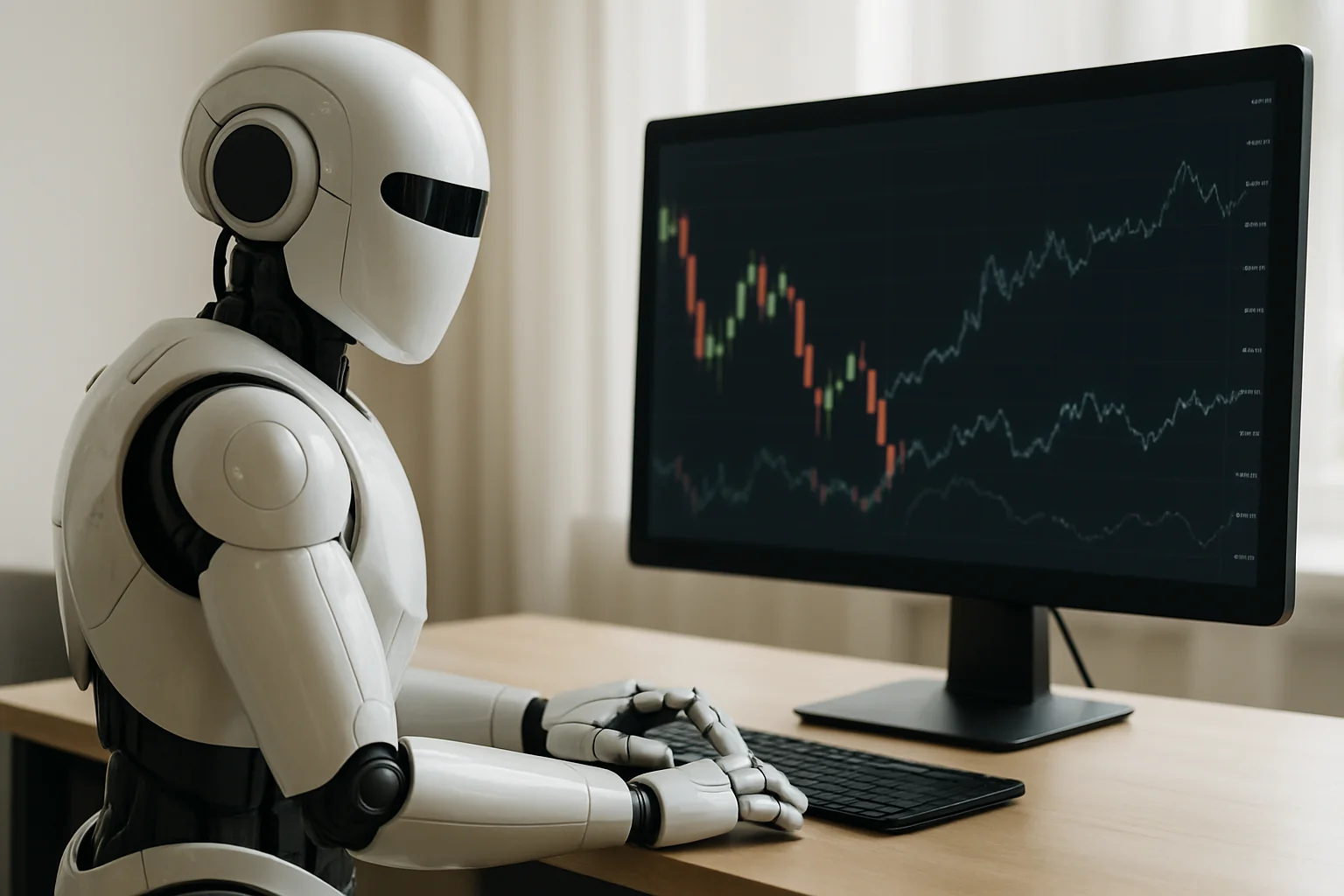
Algorithms now execute 60-80% of cryptocurrency trades and 50-70% of US equity volume, operating at speeds measured in microseconds while human traders think in seconds. This isn’t distant institutional territory—robo-advisors manage $1.4 trillion globally, and AI-powered trading tools have reached retail platforms. If you’re trading forex or crypto markets in 2024, you’re competing against machines whether you realize it or not. The question isn’t whether AI has changed the game, but how you adapt to this new landscape. This article demystifies AI trading technologies, examines their practical impact on retail traders, and shows you where human judgment still creates edge in algorithm-dominated markets.
The Rise of AI-Powered Trading Algorithms
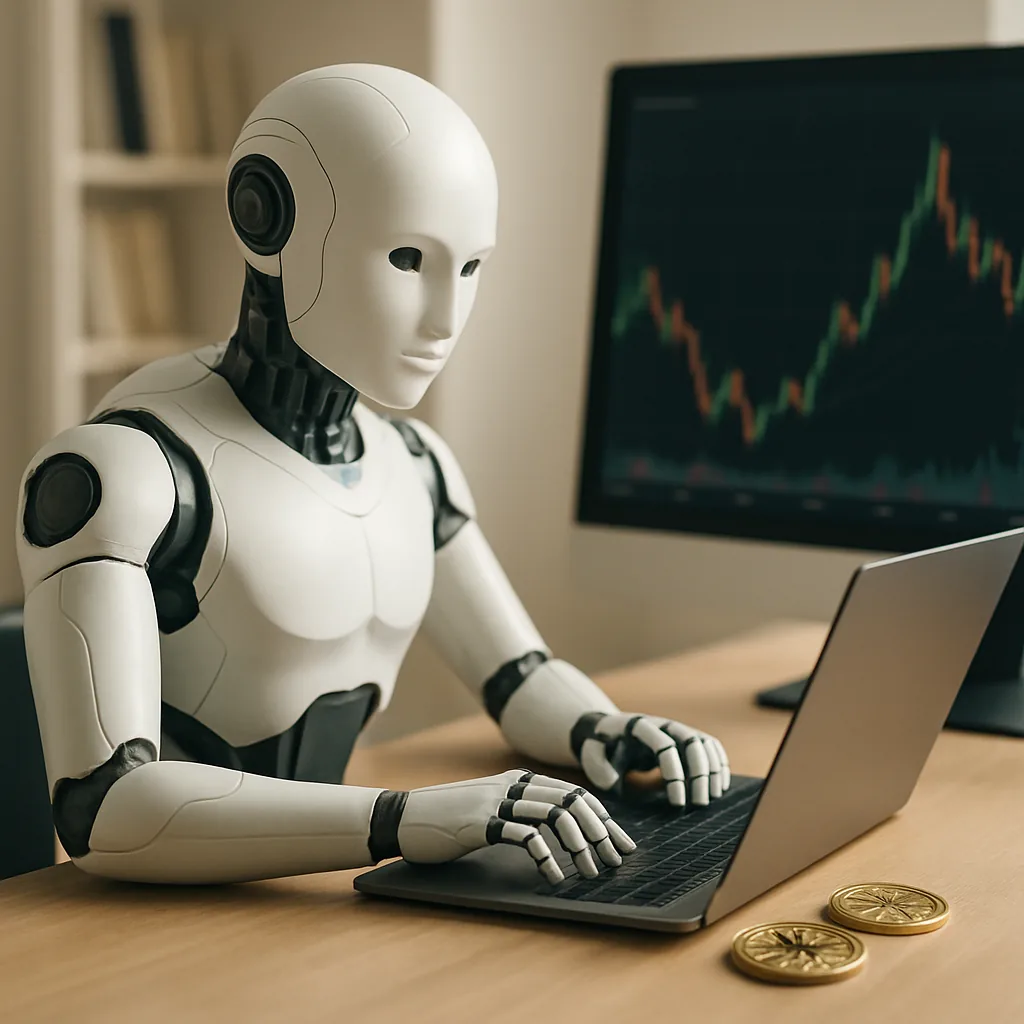
Artificial intelligence has fundamentally altered the competitive landscape of financial markets. AI-powered trading systems now process millions of data points per second, analyzing price movements, order book depth, news sentiment, and historical patterns at speeds that render human analysis obsolete for many trading strategies. High-frequency trading firms leveraging these technologies currently account for 50-70% of all equity trading volume in US markets, and their influence continues to expand into cryptocurrency and foreign exchange markets.
The scale of this transformation becomes clear when examining execution speeds. Where human traders measure decisions in seconds or minutes, AI systems operate in microseconds—one millionth of a second. This speed advantage allows algorithms to identify and exploit price discrepancies across exchanges, react to breaking news before headlines fully publish, and adjust positions based on real-time order flow that human traders cannot perceive.
The algorithmic trading market reflects this growing dominance, with projections showing growth to $31.8 billion by 2030. Over 80% of institutional traders now incorporate some form of AI or machine learning into their strategies, creating market conditions where retail traders increasingly compete against machines rather than other humans.
What AI Trading Algorithms Actually Do
AI trading systems perform several core functions simultaneously. They monitor multiple markets and timeframes, identifying correlations and divergences across thousands of instruments. Natural Language Processing algorithms scan news feeds, earnings reports, social media posts, and economic data releases, converting unstructured text into tradable signals before human readers finish the first paragraph.
These systems also manage risk dynamically, adjusting position sizes and stop-loss levels based on real-time volatility measurements and portfolio exposure. In cryptocurrency markets, where trading never stops, AI bots operate continuously without fatigue or emotional bias, executing strategies that would be physically impossible for human traders to maintain.
The Three Types of Machine Learning in Trading
Machine learning in trading environments employs three distinct approaches, each serving different purposes:
Supervised learning trains models on historical data where outcomes are known, teaching algorithms to predict future price movements based on recognized patterns. A supervised model might learn that specific candlestick formations or indicator combinations preceded price rallies 65% of the time historically, then flag similar setups in real-time.
Unsupervised learning discovers hidden patterns and relationships in data without predetermined labels. These algorithms might identify that certain assets consistently move together during specific market regimes, even when no obvious fundamental connection exists, creating opportunities for pairs trading or portfolio hedging.
Reinforcement learning allows algorithms to optimize strategies through trial and error, similar to how a chess engine improves by playing millions of games. The system receives rewards for profitable trades and penalties for losses, gradually refining its decision-making process to maximize long-term returns while managing risk constraints.
24/7 Automated Trading Bots in Crypto Markets
Trading bots now handle between 60-80% of all trading volume on major cryptocurrency exchanges, fundamentally changing who—or what—moves prices in digital asset markets. Unlike traditional markets that close for nights and weekends, crypto operates around the clock, creating an environment where automated systems have decisive advantages over human traders who need sleep.
How Crypto Bots Dominate Market Volume
These automated systems execute trades based on pre-programmed strategies built around technical indicators, price thresholds, and market conditions. A bot monitoring Bitcoin might instantly execute hundreds of trades across multiple exchanges when RSI crosses 30, or when price touches a moving average—all without hesitation or second-guessing. This speed and consistency give bots structural advantages that retail traders should understand rather than ignore.
The dominance extends beyond simple execution. Bots process market data continuously, identifying arbitrage opportunities that exist for mere seconds between exchanges. They also provide liquidity by maintaining standing orders on both sides of the order book, profiting from bid-ask spreads while human traders sleep. This constant activity means retail traders often compete against algorithms designed to exploit the exact patterns found in beginner trading strategies.
DeFi and Automated Market Makers
Automated Market Makers represent bot trading at scale. Protocols like Uniswap and Curve process billions in daily volume through algorithmic formulas that automatically set prices based on token ratios in liquidity pools. No human approves these trades. The smart contracts execute instantly when conditions match, providing 24/7 liquidity that traditional finance cannot replicate.
For retail traders, this landscape requires adaptation. Successfully using trading bots demands understanding their limitations—they follow rules rigidly and can’t adapt to unprecedented market events. Competing against them means focusing on longer timeframes, fundamental analysis, and market inefficiencies that algorithms haven’t yet learned to exploit. The goal isn’t to out-speed the bots, but to trade differently than they do.
Sentiment Analysis and Real-Time News Processing
Modern AI-powered sentiment analysis tools process over 500 million social media posts, news articles, and financial reports daily—a volume no human trader could possibly monitor. These natural language processing (NLP) algorithms don’t just read headlines; they interpret context, detect sarcasm, weigh source credibility, and aggregate sentiment signals across dozens of languages in milliseconds.
The speed advantage is staggering. When a central bank releases an unexpected policy statement or a crypto influencer tweets about a token, AI systems parse the content, quantify the sentiment, and execute trades before most retail traders have finished reading the headline. This isn’t theoretical—NLP-driven trading algorithms routinely react to market-moving news in microseconds, while human comprehension and decision-making takes seconds or minutes.
Cryptocurrency markets amplify this dynamic considerably. Unlike traditional forex pairs where fundamental factors move more gradually, crypto prices respond violently to social sentiment. A single tweet from a prominent figure can trigger 10-20% price swings within minutes. AI sentiment tools track mentions across Twitter, Reddit, Telegram, and Discord simultaneously, measuring not just volume but sentiment intensity and the credibility of accounts spreading information. When sentiment shifts from neutral to extremely positive across multiple platforms, these systems flag potential breakouts before the broader market catches on.
For retail traders, this creates both challenges and opportunities. You can’t outspeed these algorithms, but you can understand their behavior patterns. Extreme sentiment readings often precede reversals rather than continuations. When AI-driven bots pile into a trade based on positive news flow, the resulting price spike frequently exhausts itself quickly, creating short-term reversal setups for patient traders who recognize the pattern.
AI-Driven Risk Management and Portfolio Optimization
Position sizing decisions that once took traders hours of manual calculation now happen in milliseconds, adjusting automatically as market conditions shift. AI-powered risk management systems monitor volatility patterns across multiple timeframes, recalibrating exposure before human traders even notice the change in market character.
Dynamic Position Sizing and Stop-Loss Management
AI systems excel at the task most retail traders struggle with: maintaining disciplined risk parameters when markets turn volatile. These algorithms continuously analyze real-time volatility metrics like Average True Range (ATR), historical volatility, and correlation coefficients to determine optimal position sizes for each trade.
The practical advantages for retail traders include:
- Volatility-adjusted position sizing that automatically reduces exposure during high-volatility periods and increases it when markets stabilize
- Dynamic stop-loss placement based on current market structure rather than arbitrary percentage levels
- Portfolio rebalancing that maintains target risk levels across multiple currency pairs or crypto assets without manual intervention
- Emotion-free execution that prevents the common mistakes of moving stops or over-leveraging during drawdowns
When Bitcoin’s volatility spikes from 40% to 80% annualized, an AI system might automatically cut position sizes in half to maintain consistent dollar risk per trade. This mathematical precision removes the psychological burden of making difficult decisions during stressful market conditions.
How Robo-Advisors Democratize Advanced Strategies
Robo-advisors now manage over $1.4 trillion in assets, bringing institutional-grade risk management to retail accounts. These platforms apply sophisticated portfolio optimization techniques—previously available only to hedge funds—to accounts as small as $500. They continuously monitor correlation patterns between assets, adjust allocations based on changing market regimes, and implement tax-loss harvesting strategies automatically. For retail traders, this represents access to risk management frameworks that would cost thousands in development fees if built from scratch.
Pattern Recognition Beyond Traditional Technical Analysis
Deep learning neural networks have fundamentally changed what’s detectable in price charts. While traditional technical analysis relies on predefined patterns like head-and-shoulders or double tops, modern AI systems identify complex non-linear relationships that exist outside conventional pattern libraries. These systems process multiple timeframes simultaneously, detecting correlations between price action, volume dynamics, and order flow that remain invisible to standard indicators like RSI or MACD.
The core advantage lies in the neural network’s ability to learn from vast datasets without human bias. A supervised learning model trained on five years of EUR/USD tick data can recognize subtle pre-movement signatures—micro-patterns in bid-ask spreads, volume clusters at specific price levels, or volatility contractions that precede breakouts. These patterns often span multiple currency pairs simultaneously, creating correlation matrices too complex for manual analysis.
Current AI-driven forex platforms report prediction accuracy rates between 70-85% for short-term directional moves, though traders should scrutinize these claims carefully. The accuracy varies significantly based on market conditions, currency pairs, and prediction timeframes. More importantly, high accuracy doesn’t automatically translate to profitability when transaction costs and slippage are factored in.
Backtesting capabilities represent another transformative shift. What once required weeks of manual strategy testing across different market conditions now happens in minutes. Modern platforms simulate thousands of parameter combinations across years of historical data, identifying which technical setups actually generated edge versus those that appeared profitable by chance. This computational power helps separate robust trading strategies from curve-fitted systems that fail in live markets.
The practical implication for retail traders: AI doesn’t replace technical analysis fundamentals, but it expands the pattern universe beyond what human observation can capture. Understanding these capabilities helps traders evaluate whether AI-assisted tools genuinely add value or simply repackage traditional approaches with algorithmic marketing.
Speed Advantages: From Seconds to Microseconds
Modern AI-powered trading systems execute trades in microseconds—one millionth of a second. This represents a fundamental shift from the seconds-long execution times that defined retail trading just a decade ago. When an arbitrage opportunity appears between two exchanges, high-frequency trading firms can identify, execute, and profit from the price discrepancy before a human trader even sees the signal on their screen.
The speed differential creates an unbridgeable competitive moat in certain trading strategies. AI systems now account for 50-70% of all equity trading volume in US markets, operating at speeds where a few microseconds determine profitability. These systems scan millions of data points per second, processing order book depth, news sentiment, and pattern recognition simultaneously. In cryptocurrency markets, where volatility creates frequent arbitrage windows, automated systems can execute cross-exchange trades faster than the blockchain can confirm transactions.
This reality doesn’t mean retail traders should abandon electronic markets. Speed advantages primarily matter for high-frequency strategies—scalping tiny price discrepancies across thousands of daily trades. Retail traders compete effectively by focusing on different timeframes and approaches. Swing trading, position trading, and pattern-based strategies operating on hourly or daily charts don’t require microsecond execution. A well-timed trade held for days or weeks isn’t undermined by slower order fills.
Understanding these speed dynamics sets realistic expectations. Retail traders shouldn’t attempt to front-run institutional algorithms or capture fleeting arbitrage opportunities. Instead, focus on strategies where analysis quality and patience matter more than execution speed. The institutional money racing at microsecond intervals is playing a fundamentally different game than the retail trader building positions over hours and managing them over weeks.
Practical Implications for Retail Forex and Crypto Traders
Competing with institutional algorithms on speed and volume is a losing battle for retail traders. When high-frequency trading firms execute trades in microseconds and process millions of data points per second, trying to scalp ticks on the 1-minute chart puts you at a structural disadvantage. The smart response isn’t to abandon trading—it’s to shift your approach to areas where AI speed advantages diminish and human judgment still matters.
AI Tools Accessible to Retail Traders
Several AI-powered tools have become accessible to retail traders without requiring institutional budgets or programming expertise:
- Sentiment analysis platforms like LunarCrush and The TIE aggregate social media data and news sentiment across crypto assets, providing real-time mood indicators that inform directional bias
- Automated risk management systems that adjust position sizing based on volatility, enforce maximum drawdown limits, and execute stop-losses without emotional interference
- Pattern recognition software such as TrendSpider and Trade Ideas that scan hundreds of charts simultaneously for technical setups matching your criteria
- AI-assisted backtesting tools that rapidly test strategy variations across different market conditions, compressing months of manual work into hours
These tools work best when they handle data-heavy grunt work while you focus on interpretation and discretionary decision-making. Think of AI as a research assistant, not a replacement for your trading brain.
Where Human Traders Still Have an Edge
Your competitive advantage lies in areas where context, adaptation, and creative thinking matter more than computational speed:
Longer timeframe analysis on daily and weekly charts reduces the importance of millisecond execution. Swing trading and position trading strategies allow you to spend hours analyzing market structure, fundamental catalysts, and risk-reward scenarios—decisions that benefit from patient human judgment.
Adaptive thinking during regime changes gives humans an edge when market behavior shifts. AI models trained on historical data struggle when correlations break down or unprecedented events occur. Retail traders who recognize when their strategies stop working and adjust accordingly can outperform rigid algorithms.
Contextual interpretation of news and events remains challenging for AI. While natural language processing can detect sentiment, understanding the second-order effects of central bank policy shifts, geopolitical tensions, or regulatory changes requires nuanced thinking that machines haven’t mastered.
The goal isn’t to beat AI at its own game—it’s to build strategies where algorithmic advantages matter less and human strengths matter more.
Moving Forward in Algorithm-Dominated Markets
AI and automation have fundamentally reshaped trading landscapes in both forex and crypto markets, handling majority volume and operating at speeds humans cannot match. This isn’t a future trend—it’s the current reality. Retail traders who ignore this shift risk competing on battlefields where they’re structurally disadvantaged from the start.
Adaptation doesn’t mean abandoning discretionary trading or becoming a programmer. It means using accessible AI tools for data-intensive tasks like sentiment monitoring and risk management while focusing your energy on longer timeframes where speed matters less than quality analysis. It means understanding algorithmic behavior patterns well enough to avoid getting swept up in bot-driven momentum spikes that reverse just as quickly. Most importantly, it means developing edges through contextual judgment, adaptive thinking, and disciplined execution—areas where human traders still compete effectively.
The democratization of AI trading tools represents genuine opportunity. Strategies and risk management frameworks that cost hedge funds millions to develop a decade ago now reach retail accounts through affordable platforms. Success still requires education, realistic expectations, and the discipline to use these tools wisely rather than as magic profit generators. The technology has leveled access, but profitable trading still demands the fundamentals: sound strategy, proper risk management, and the psychological resilience to execute your plan when markets test your conviction.